
Introduction
Most people think of soil as dirt — something lifeless we simply plant into. But in reality, soil is a living ecosystem, and how we treat it determines the health of our food, our climate, and ourselves. That’s where regenerative agriculture comes in.
Regenerative agriculture isn’t just another buzzword. It’s a powerful, practical approach to farming and gardening that focuses on healing soil, restoring ecosystems, and creating abundance. The best part? You don’t need hundreds of acres — you can start regenerative practices right in your backyard.
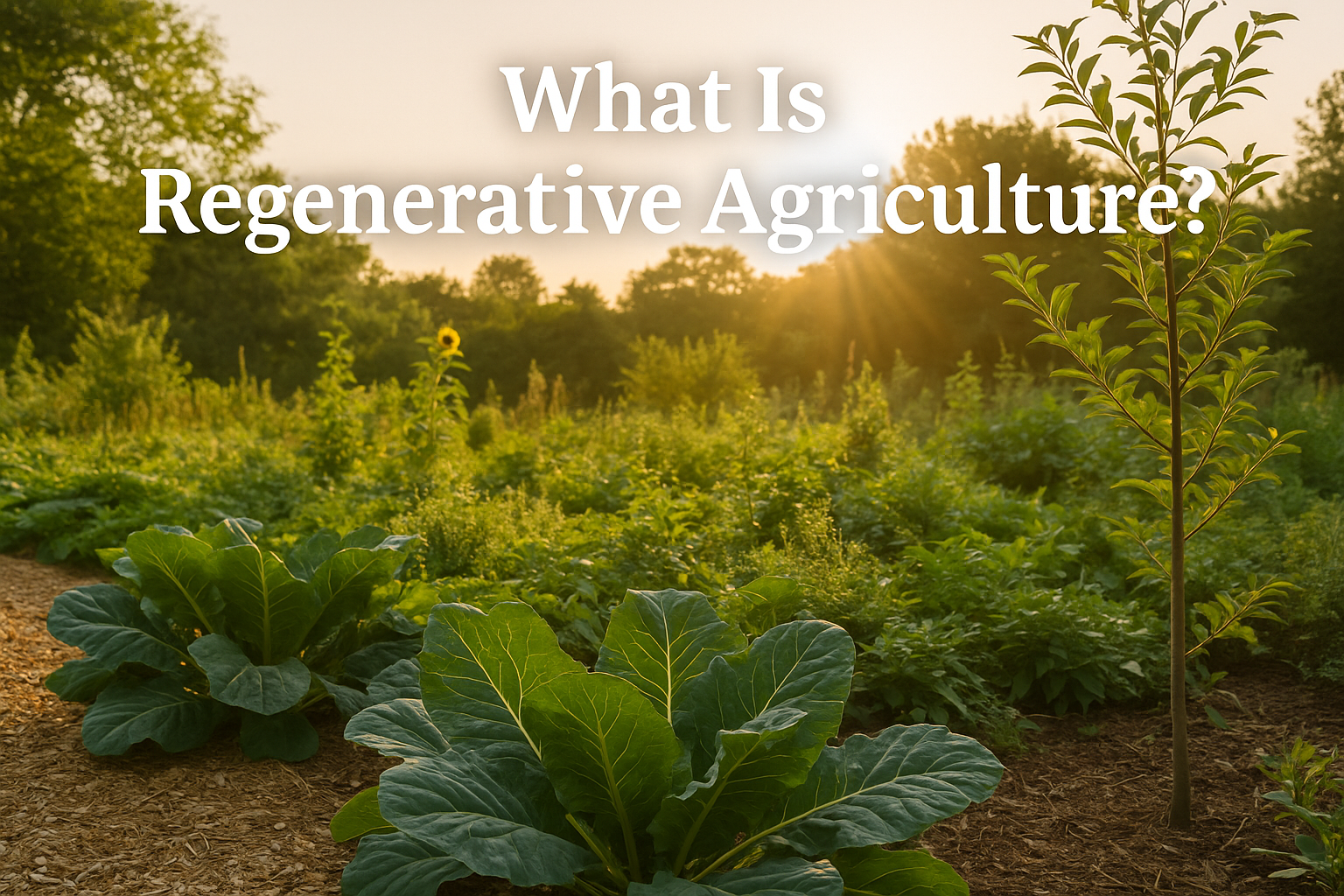
What Is Regenerative Agriculture?
At its core, regenerative agriculture is a holistic farming and land-management system designed to rebuild soil health, increase biodiversity, and restore ecological balance.
Key principles include:
-
Prioritizing soil health → focusing on organic matter, microbes, and fungi.
-
Enhancing biodiversity → growing a variety of crops, cover plants, and beneficial species.
-
Water management → capturing rain, preventing runoff, and improving infiltration.
-
Carbon sequestration → locking carbon back into soils through plants and microorganisms.
Want to dive deeper? My book Soil Science for Regenerative Agriculture explains the science behind these principles in simple, practical terms.
How It Differs from Organic & Conventional Farming
| Conventional | Organic | Regenerative |
|---|---|---|
| Relies on chemical fertilizers, pesticides, and tillage. | Avoids synthetics, focuses on natural inputs. | Builds living ecosystems, prioritizes soil food web & carbon cycling. |
| Short-term yields, soil depletion over time. | Healthier soil than conventional, but not always ecosystem-focused. | Long-term resilience, thriving ecosystems, healthier food. |
Benefits of Regenerative Agriculture
-
Healthier Soil: More microbial activity, stable structure, and fertility.
-
Climate Resilience: Better water retention, less erosion, and improved drought resistance.
-
Stronger Plants & Food: Nutrient-dense harvests, less pest pressure.
-
Global Impact: Sequesters carbon, combats climate change.
5 Ways to Start Regenerative Agriculture at Home
Even if you only have a small garden or homestead, you can start building soil health today:
-
Composting – Turn food scraps and yard waste into rich humus. (Affiliate link opportunity: compost bins, tumblers)
-
Cover Cropping – Use clover, rye, or vetch to protect and feed soil.
-
Mulching – Wood chips, straw, and leaves keep soil covered and fungi fed.
-
Crop Diversity – Mix annuals, perennials, herbs, and flowers.
-
Fungi & Mycorrhizae – Add fungal inoculants or simply leave woody debris to encourage natural networks.
Here are some of my favorite products to get you started. As an Amazon Associate, I earn from qualifying purchases.
Worm Bin for worm farming and Composting
Common Myths & Misconceptions
-
“It’s only for farmers.” → Home gardeners and small homesteads can practice regenerative ag daily.
-
“It’s the same as organic.” → Organic avoids chemicals; regenerative actively restores ecosystems.
-
“It takes years to see results.” → Many soil improvements can be seen in a single growing season.
Final Thoughts + Next Steps
Regenerative agriculture isn’t just about growing food — it’s about healing the earth while nourishing ourselves. Whether you’re tending a backyard garden or dreaming of a homestead, the steps you take today will ripple through your soil, your community, and future generations.
👉 Want a simple way to start? Download my free Soil Health Checklist to see exactly what your soil needs today. And if you’re ready to dive deeper, check out my books Think Like an Ecosystem and Soil Science for Regenerative Agriculture.
FAQs
Is regenerative agriculture the same as permaculture?
They overlap, but permaculture is a design philosophy for sustainable living, while regenerative agriculture is specifically focused on soil and farming practices.
Can I practice regenerative agriculture in a backyard garden?
Yes! Composting, mulching, and encouraging soil fungi are simple ways to start.
How long before I see results?
Many gardeners see healthier plants and better yields within one season, though soil improvements continue for years.
0 Comments