
Introduction
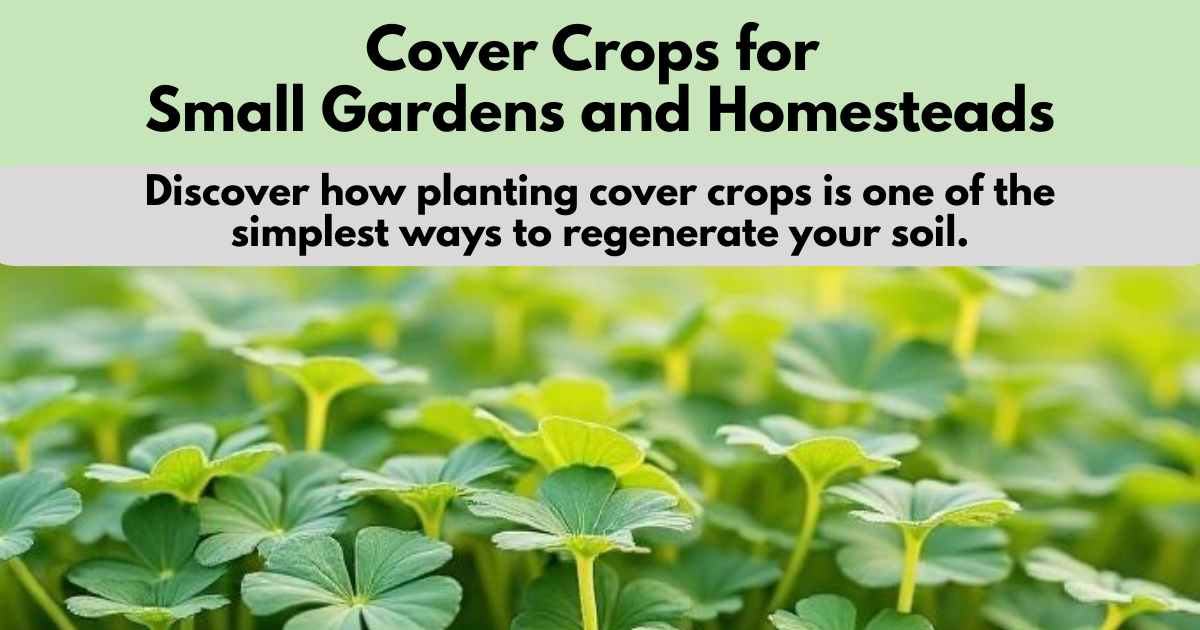
When you hear the term cover crops, you might picture tractors rolling across acres of farmland. But the truth is, cover crops are just as powerful in small gardens and homesteads. Whether you tend raised beds, backyard plots, or a few fruit trees, planting cover crops is one of the simplest ways to regenerate your soil.
Check out some of these other blog post of topics we’ve already explored:
-
What Is Regenerative Agriculture? → why soil health is the foundation of abundance.
-
The Soil Food Web Explained Simply → how microbes, fungi, and worms transform your soil.
-
How to Test Your Soil Health Without Expensive Equipment → simple DIY methods to read your soil.
Today, we’ll build on those ideas and explore how cover crops—sometimes called “green manure”—can feed your soil, protect your land, and grow healthier food.
🌱 What Are Cover Crops (And Why They Matter)?
Cover crops are plants grown not for harvest, but for the soil itself. Instead of pulling nutrients out of the soil, they cycle energy back in.
Benefits of cover crops:
-
Add organic matter and build soil fertility.
-
Suppress weeds naturally.
-
Prevent erosion and protect bare soil.
-
Fix nitrogen (especially legumes).
-
Feed the soil food web—bacteria, fungi, protozoa, nematodes, and arthropods.
👉 Related reading: The Soil Food Web Explained Simply
🌾 The Best Cover Crops for Small Gardens
Even in small spaces, the right cover crop can transform your soil. Here are some top picks:
As an Amazon Associate, I earn from qualifying purchases.
Legumes (Nitrogen Fixers):
-
They host nitrogen-fixing bacteria, giving you free fertility for vegetables and fruit trees.
Grasses (Biomass Builders):
Brassicas (Soil Breakers):
-
Radish, mustard, turnips
-
Penetrate hardpan soils and reduce compaction.
Mixes (Biodiversity Wins):
-
Diverse blends mimic ecosystems → different root depths, multiple microbial foods.
-
Try a cover crop seed mix → easy for beginners and powerful for building soil diversity.
🌿 How to Plant Cover Crops in Small Spaces
-
Interplanting: Sow low-growing clovers between veggies.
-
Off-season sowing: After fall harvest, sow oats or vetch to cover bare soil over winter.
-
Raised beds & containers: Yes! Red clover or oats work beautifully even in pots.
Check out How to Test Your Soil Health Without Expensive Equipment — cover crops directly improve infiltration, texture, and worm counts.
Managing Cover Crops Without Heavy Machinery
Don’t worry—no tractor needed! In small gardens, cover crops are easy to handle:
-
Chop-and-drop: Cut them down and leave as mulch.
-
Crimp by hand: Flatten stems with a rake or board.
-
Mulch in place vs. compost: Either option returns organic matter to soil.
🌍 Cover Crops in Regenerative Agriculture
Cover crops are at the heart of regenerative systems. They:
-
Mimic natural ecosystems (Think Like an Ecosystem).
-
Support soil structure and carbon storage (Soil Science for Regenerative Agriculture).
-
Fuel the soil food web with constant organic matter.
👉 Related reading: What Is Regenerative Agriculture?
FAQ
Q: Can I grow cover crops in raised beds?
Yes—clover, peas, and oats thrive in raised beds or even containers.
Q: Do cover crops steal nutrients from my veggies?
Not if managed properly—cut or crimp before they go to seed, and nutrients cycle back into the soil.
Q: What’s the easiest cover crop for beginners?
Clover or oats—they germinate quickly, are easy to manage, and improve soil fast.
✅ Recommended Tools & Seeds
-
Cover Crop Seed Mix → Build biodiversity in your soil effortlessly.
-
Mycorrhizal Inoculant → Supercharge legumes’ nitrogen-fixing ability.
-
Broad fork → Loosen compacted soil before planting cover crops.
-
Compost Bin → Combine cover crop residue with food waste for living humus.
🌟 Final Thoughts
Cover crops aren’t just for big farms—they’re one of the most affordable, effective ways for small gardens and homesteads to regenerate soil. By sowing a little clover, rye, or radish, you’re building fertility, feeding microbes, and working with nature.
To dive deeper into the science and systems thinking behind these practices:
-
📘 Think Like an Ecosystem → designing gardens that mimic natural systems.
-
📗 Soil Science for Regenerative Agriculture → practical soil tests, biology, and regeneration strategies.
👉 And don’t forget your free Fruit Tree Pruning & Shaping Guide — because what grows above ground can also feed what’s below.
0 Comments